-->
≡
Home
Woman
Sport
Business
Health
Privacy Policy
Contact Us
Contact Us
Meet Your Microbiome!
:
:
2017-03-15T21:19:15Z
Wednesday, 15 Mar 2017 - 09:19 PM
Maybe you’ve heard this one before:
the human body has ten times more microbial cells than human cells.
Now, that claim isn’t totally accurate.
Based on recent estimates,
there are probably about as many microbial cells as human cells in your body.
In fact my favorite thing that I heard was
a single defecation event can swing the balance the other way.
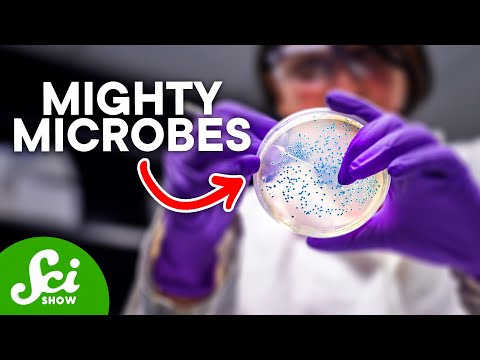
But either way, there are trillions and trillions of microbes living on and inside you,
which is kind of weird to think about.
And over the last several decades,
scientists have started to really dig into how your microbiome,
that is, your personal community of tiny critters,
affects your health.
And it turns out that it has a pretty big impact.
The microbial communities in our bodies include members
of a hugely diverse array of kingdoms and species:
there are bacteria, fungi, viruses, protists like amoebas,
microscopic bugs like mites,
and archaea, which look kind of like bacteria but are very different biologically.
We’re in symbiotic relationships with many of our microbes:
we give them a home, and their presence benefits us.
But they can create problems if the wrong kind of species
is introduced or if the balance between colonies gets thrown off.
Different people’s microbes generally do similar jobs.
But your personal microbiome is unique to you:
the species of bacteria that digest carbohydrates in your gut
might not be the same as species that do it in mine.
And the ratios between species can be totally different from person to person.
That uniqueness can make microbiome research harder.
It can be tough to figure out what a normal microbial community should look like,
which means it’s not easy to identify what happens when things go wrong.
That said, over the years researchers have learned a lot
about how the microbiome forms, how it can affect your health,
and in some cases,
they’ve even figured out how to fix it when it gets out of whack.
For microbes, different areas of your body are basically totally different habitats.
Places like your skin, mouth, intestines, and vagina (if you have one)
each have their own unique communities that grow and change over time.
But you don’t even really have a microbiome until you’re born.
The uterus is almost totally sterile,
but as soon as you’re born you’re exposed to millions of microbes
that immediately begin to colonize your body.
The birth itself affects the microbiome:
babies who are born vaginally are covered with the microbes
living in their mothers’ birth canals,
while babies born by C-section are exposed to a different set of microbes
like ones that live on skin.
Even where a baby is born can make a difference to the microbes
found in and on their bodies
the microbiomes of babies born at home
and babies born in the hospital look different.
As you grow up, you pick up new microbes from your environment
and the people around you, and the microbial communities
in different areas of your body become more specialized.
During this shift, the foods you eat can affect the structure
of your gut microbiome.
Researchers have found differences between
the microbiomes of breastfed and formula-fed babies.
Even as an adult, tons of things can influence your intestinal microbiome
everything from the foods you eat, to the illnesses you get,
to the medications you’re prescribed.
Your microbiome doesn’t really stop changing until you reach old age.
That’s when the overall diversity of the microbiome decreases,
and there’s less variation between individual people.
These diverse, changing microbes collectively add up
to a lot of potential impact on your health.
Your mouth, for example, is full of microbes
they’re all over your teeth, and tongue, and gums, and tonsils.
And when you kiss someone, you are sharing all those microbes with them!
It’s very romantic!
Most of the oral microbiome is harmless, though,
and might actually help you out by gobbling up all the resources
so other, more deadly species can’t set up shop.
But things can get ugly when there are shifts in the balance
of the microbial community in your mouth.
Environmental factors like smoking and diet can affect your mouth’s environment,
which can lead to an overabundance of microbes that are normally harmless,
but can cause problems when there are too many of them, like cavities.
And poor oral hygiene can lead to all kinds of oral health issues,
like gingivitis, dry sockets, and even tonsillitis.
Then there’s the microbiome in your gut.
It turns out that the microbes in your stomach and intestines
are actually super important for your dietary health:
they help break down and digest food,
influencing the nutrition you get from what you eat.
Because the microbiome is so diverse and it’s a relatively new field of study,
there’s a lot biologists don’t know about how the microbes
in your gut affect your health.
But they are learning.
Recently, for example, researchers have found some evidence
that in people with conditions like irritable bowel syndrome, or IBS,
the kinds of foods they eat could be interacting with their microbiomes,
leading to their symptoms.
The idea is that diets high in certain kinds of sugars
oligosaccharides, disaccharides, monosaccharides and polyols,
or FODMAPs for short
can cause fermentation in some people’s guts
because of the makeup of their microbiome.
This fermentation is thought to lead to the symptoms
of Irritable Bowel Syndrome: cramps, constipation, diarrhea, and gas.
Small clinical trials have found some support for this theory:
in small groups of patients (around 30 per study)
subjects who ate diets that were low in FODMAP sugars
reported that their symptoms were less severe,
especially when it came to pain and discomfort.
One study found that this improvement in symptoms corresponded
to more diversity in some kinds of gut bacteria.
This research is still pretty new, and again, the sample sizes were small,
so it’s not clear how effective a low FODMAP diet might be for IBS,
or if it even really works.
But so far, it seems promising.
So expect to see “low FODMAP food” on labels any minute now!
In more severe intestinal conditions,
like inflammatory bowel disease and Crohn’s disease,
scientists have found connections between less diversity in the microbiome
and the level of disease activity.
Basically, how bad you’re feeling.
And it’s not just the bacteria that seem to be playing a role.
One study found that a particular type of fungus, called Candida tropicalis,
is more abundant in the intestines of people with Crohn’s disease
than those of their non-affected family members.
Right now, though, it’s not clear if the changes in the microbiome
lead to the disease, or if the disease lead to the changes.
All we know is that there’s a strong connection between bowel inflammation
and the microbiome, and that the connection seems to have big effects.
Gut microbiome seems to play a role in other conditions that affect digestion, too.
Clostridium difficile, or C. diff for short, is a type of bacteria
whose toxins cause diarrhea and fevers and can lead to colitis,
an inflammatory bowel disease that causes cramps,
ongoing diarrhea, among other painful symptoms.
C. diff infections are often picked up in hospitals,
where patients’ health is already compromised.
And often, they get the infection because they took prescription antibiotics.
See, most antibiotics are broad-spectrum,
meaning that they kill lots of different kinds of bacteria, not just the bad ones.
So the helpful bacteria that normally live in your gut become collateral damage
in the fight against infections, and when they’re killed off by antibiotics,
C. diff can move in and fill up the space.
In a sick patient with a weakened immune system, that can be a serious issue.
And when someone’s struggling with chronic C. diff infection
that doesn’t respond to normal antibiotics,
a great way to fix their microbiome is to just … give them a new one.
That’s done with a fecal transplant,
which is pretty much exactly what it sounds like:
doctors take fecal matter from a donor and transplant it into a patient’s colon.
Basically, they put someone else’s poop up in there.
After the transplant, patients end up with microbial profiles
that look a lot like the donor’s,
which usually translates to more good bacteria and less bad bacteria.
Those new good bacteria are able to out-compete the C. diff,
fighting off the infection.
Researchers have gotten similar results when they culture the microbes
from a donor’s fecal sample and insert it into the affected patient,
allowing doctors to skip the full-on fecal transplant and giving them
more control over what, exactly, they’re giving their patients.
These techniques might seem kind of unappetizing, but they often work.
Using antibiotics can have a big influence on your microbiome in other ways.
Antibiotics that kill off all kinds of bacteria can contribute
to a dysbiotic microbiome,
one that doesn’t have the right kinds of species in the right proportions.
A dysbiotic microbiome is linked to pretty broad health issues,
like not getting proper nutrition and less protection against dangerous pathogens.
Studies have found that the high, extended doses of antibiotics
used to protect premature infants could be causing
all kinds of microbiome issues, including higher rates of mortality
due to drug-resistant infections.
At the same time, when severely malnourished children
are treated with antibiotics as part of their recovery,
it seems to help them recover faster and reduces mortality.
Malnutrition in children might lead to lifelong changes in their microbiomes,
and it’s possible that giving those kids antibiotics
helps correct some of those changes.
Scientists are working on other questions, too,
like how interaction between antibiotics and the microbiomes
might affect obesity and diabetes.
Since your microbiome has such a huge effect on the rest of your health,
you might be wondering how you can take care of it.
So, can you do anything good for your microbiome,
aside from putting poop up your butt?
Well, researchers are working on developing new therapies
to help protect your good microbes and keep you healthy.
For example, they’re trying to develop alternative approaches
to treating bacterial infections that don’t just rely on broad-spectrum antibiotics
like treatments that block the toxins released by bacteria
instead of just killing all the bacteria.
And to help balance out dysbiotic microbiomes,
researchers are working on understanding how probiotics,
microorganisms that have health benefits when they’re consumed,
might help restore proper levels of good bacteria in your gut.
They’re also trying to develop genetically engineered strains of bacteria
that can produce compounds to fight the bad microbes,
like the Avengers for your intestines.
And, they’re still studying how fecal transplants restore order
in the microbiomes of sick patients,
including how exactly microbes from donors are able to fight off infection.
While they’re still trying to piece together the microbiome puzzle,
there are some things you can do to keep your microbiome healthy.
Different foods influence which kinds of microbes can grow, and how much.
That’s especially true when it comes to the kinds of vegetables you eat,
because the bacteria in your guts rely on all that fiber.
Lots of different kinds of vegetables means lots of different kinds of fiber,
which means lots of diversity in the microbes in your gut.
But if there’s one thing we know for sure,
it’s that microbiomes are really complicated.
And everyone’s microbiome is different, so every person’s needs are different.
There’s probably no one-size-fits-all trick for growing
or maintaining a healthy population of microbes inside you.
It’ll be a while before scientists have it all figured out.
There are a lot of genes to sequence, and a lot of interactions to pick apart.
What is clear, though, is that the microbes living in and on you
are just as much a part of your health as your own cells.
And these tiny organisms play dramatic and important roles in your health.
Thanks for watching this episode of SciShow,
which was brought to you by our patrons on Patreon.
If you want to help support this show, just go to patreon.com/scishow.
It’s a place where people give money so that other people can do cool stuff.
There’s lots of cool stuff on Patreon.
Check it out!
And if you want to see more of this,
you can go to youtube.com/scishow and subscribe!
Facebook
Twitter
Google Plus
SciShow
Latest Posts