-->
≡
Home
Woman
Sport
Business
Health
Privacy Policy
Contact Us
Contact Us
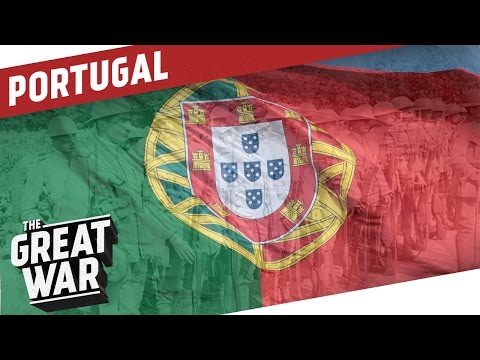
The Forgotten Ally - Portugal in WW1 I THE GREAT WAR Special
:
:
2017-04-03T17:09:19Z
Monday, 3 Apr 2017 - 05:09 PM
100 years ago the first Portuguese troops fought in the trenches of the Western Front.
Portugal is often overlooked when people talk about World War 1.
And their soldiers were in some ways even forgotten by their own government.
And Portugal is what we are going to talk about today.
I’m Indy Neidell; welcome to a Great War Special Episode about Portugal and the First
World War.
In the late 19th century, the Kingdom of Portugal had a much larger territory than Portugal
has today.
From the Azores in the Atlantic to Angola and Mozambique in Africa to East Timor in
Southeast Asia, Portugal’s foreign territories were far larger than its European lands.
But Portugal had limited military resources and a small “home” population and couldn’t
rely on itself alone to maintain its empire.
For that, Portugal relied on close diplomatic ties with Britain.
Those ties prevailed in spite of the “pink map” affair, when Portugal tried to create
a Trans-African colony that would have interfered with Cecil Rhodes’ plans for a Cape to Cairo
railway.
The Portuguese government gave in to British demands realizing that they couldn’t win
a war.
But that had huge repercussions on public opinion in Portugal.
It was a humiliation and the king and the government were cowards.
The Republican faction exploited this sentiment to attack King Carlos I.
They mounted a failed coup in 1891, but over the next two decades their support and influence
grew and grew.
In 1908, Carlos and his son were assassinated by Republican activists, and in 1910 they
mounted a successful coup.
Portugal became a republic like France and Switzerland.
The war broke out and the ties with Britain and strong anti-German sentiment made Portugal
view the Entente favorably.
That anti-German sentiment was from colonial issues; the Portuguese African colonies bordered
the German ones and there was tension and even skirmishing between the two before the
war.
Portugal asked Britain how they could help out in the war effort, and they were basically
put on hold.
“For the present moment His Majesty’s Government would be satisfied if the Portuguese
government refrained from proclaiming neutrality.
In the event of His Majesty’s government considering it necessary to make any demand
upon the Portuguese government which would not be compatible with the latter’s neutrality,
they would appeal to the Alliance as justification for such demand.”
That appeal finally came in early 1916.
Following a British request, Portugal seized all German and Austro-Hungarian ships in Portuguese
ports and Germany declared war on Portugal.
Now, Portugal and Germany were already engaged militarily in Africa, but because it was peripheral
neither side had seen the need to officially declare war, so this declaration was for Portugal’s
entry into European hostilities.
But it wasn’t just Britain’s request that brought Portugal into the war.
See, the new Portuguese regime wasn’t that popular among the people, partly because of
tax reforms, the secularization of the state, and the legalization of divorce, but also
Portugal’s economic situation was dire.
Afonso Costa, the leader of one of the new parties, thought Portuguese intervention could
unite the country around a common goal, thus using patriotism to stabilize the government.
He was the main promoter of the interventionist movement.
Recent historians suggest that he also thought intervention would bring financial benefits,
and that theory is supported by the fact that he was their representative at Versailles
postwar and actively pushed for financial compensation there.
We’ve talked about the fighting in Africa in our regular episodes and Africa specials,
so let’s look at the European theatre.
Germany declared war on Portugal March 3, 1916 and preparations for a Portuguese Expeditionary
Force - the CEP - began May 24th, when Minister of War General José Norton de Matos gave
the green light to initially drafting and training 20,000 men.
The men spent most of the rest of the year training in the weapons and techniques of
modern war and were then brought to Lisbon and put under the command of General Fernando
Tamagnini de Abreu e Silva.
The troops were sent to France over the first two months of 1917 and were all there by February
23rd.
Once at the front, the British gave them further training in trench warfare and British weapons
and equipment.
The men were gradually assigned to British units and the Portuguese to reach the trenches
did so April 4th.
That same day also saw the first Portuguese casualty.
Soon, the British began to organize entirely Portuguese units that were integrated into
British brigades.
When there were enough units, an entirely Portuguese brigade was formed.
This repeated itself until two Portuguese divisions could be formed, one under General
Sinel de Cordes and one under General Gomes da Costa.
Once these divisions were formed, they were given a section of the front to defend, on
the La Lys River between Armentieres and Bethune.
This was an 11km section of front.
By comparison, in April 1918 the Americans had about the same amount of front to defend,
but had three times as many men there as the Portuguese.
Those Portuguese would also be seriously affected by events back home.
December 1917 saw a change of power in Lisbon.
Sidonio Pais’ new authoritarian government was openly against Portugal participating
in the war and he distanced himself from the whole thing.
He had been Portuguese Ambassador to Berlin until 1916 and was pretty pro-German.
For the Portuguese Army in the field this meant that they would get no further assistance
from Lisbon.
The men felt abandoned and morale plummeted.
This really showed when their sector of the front went active in April 1918.
The Portuguese troops were exhausted after six straight months at the front and were
due to be relieved by British troops April 9th.
That very morning, while the relief was in progress, the Germans attacked with around
55,000 men.
The sector was thrown into confusion.
The Germans swiftly took the first few defensive lines.
High Command ordered a retreat to new defensive positions but the Portuguese and British had
to delay the Germans to cover the retreat.
The orders were to “Die at Line B”.
This they did, but they did also slow the German momentum and by the time the Germans
reached the rear of the sector, they were stopped.
The Portuguese forces had been crushed.
1,300 men dead, 4,000 wounded, and 7,000 taken prisoner.
The survivors were replaced by British troops and the CEP never really recovered after La
Lys.
That battle did produce the hero Anibal Milhais, who fought the Germans single-handedly with
a Lewis Gun there.
He reportedly killed several hundred German soldiers during the four days he wandered
the front, after personally enabling the retreat of several entire units.
He was awarded the highest Portuguese military honors and remains a badass legend to this
day.
After La Lys, the men performed mostly auxiliary tasks until they saw smaller scale front line
duty toward the end of the war.
General Tamagnini was replaced in July 1918 by General Rosado.
A month after the war, Sidonio Pais was assassinated and the interventionists came to power once
again.
At Versailles, Portugal got a piece of Mozambique and the promise of reparations from Germany.
These were never paid but Germany did build a new naval base near Lisbon that’s still
in use today.
The war had produced a big rift between the politicians and the army.
The army wasn’t even that well received when it returned home and the military leaders,
like Da Costa, who felt neglected during the war began to participate in the political
arena.
This, together with high inflation, high unemployment, and shockwaves from Russia’s Bolshevik revolution
put the Portuguese Republic in a precarious state.
Between 1920 and 1926 there were 23 governments in Portugal, as one fell after another, before
Da Costa staged a coup in 1926 that would begin a period of nearly 50 years of authoritarian
rule in Portugal.
All that is beyond the scope of this channel, though.
Today was just a brief look at Portugal before and during the war.
You should look it up yourself to get a better understanding, particularly the colonial struggles
with Germany.
I just thought I’d say a few words about one of the smaller nations that fought the
war, but still one who sent men to die at the front, and one whose soldiers were unfortunately
neglected by the people at home.
Thank you Pedro Paulo for helping us with the research for this episode.
If you want to learn more about the week Germany declared war on Germany, you can click right
here.
Don’t forget to like us on Facebook and follow us on Twitter for more background information
about World War 1.
See you next time.
Facebook
Twitter
Google Plus
The Great War
Latest Posts