-->
≡
Home
Woman
Sport
Business
Health
Privacy Policy
Contact Us
Contact Us
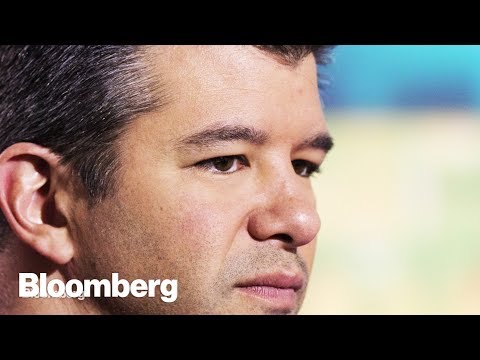
The Rise and Fall of Uber's Controversial CEO
:
:
2017-06-21T19:47:11Z
Wednesday, 21 Jun 2017 - 07:47 PM
Sometimes it’s impossible to separate the company from the founder.
Mark Zuckerberg and Facebook.
Steve Jobs and Apple.
Elon Musk and Tesla.
And for better or worse…
ERIC NEWCOMER: It’s hard thinking about Uber without thinking about Travis Kalanick.
ERIC: But...that’s not always a good thing.
That’s Eric Newcomer.
ERIC: I cover Uber and startups for Bloomberg.
Kalanick has become a lightning rod of controversy in the tech industry over the past few years.
And Seth Meyer's says he's what happens when you...
SETH MEYERS: spray Axe body spray into a suit until it became sentient.
And after a number of damaging scandals, Kalanick resigned as CEO from his 69
billion dollar brainchild.
This is the story of how Travis Kalanick built one of the most successful -- and controversial
-- tech companies in the world.
Travis Kalanick was born in 1976 in Los Angeles.
He went to UCLA to study engineering, and started his first company with some classmates,
an online file exchange service called Scour, Months before graduating, he dropped out to
work on Scour full time.
ERIC: It was back in sort of the Napster days, and it was sort of a failed effort.
Scour ended up getting sued by almost every major entertainment label to the tune of 250
billion dollars.
--and Kalanick was forced to take the firm into Chapter 11
Undaunted, Kalanick started another company.
ERIC: called Redwoosh, another peer-to-peer file sharing service.
Which got bought out for $19 million by a company called Akamai.
A cloud computing services company.
ERIC: But for Travis, he never built the empire that he’d hoped to.
Flush with cash after selling Redswoosh, Kalanick was looking to make his next move.
The story goes he was in Paris with his friend Garrett Camp, who had founded the social site
StumbleUpon, and they started talking about...
ERIC: The idea of calling a car with the push of a button.
He came back to San Francisco and started Uber in 2009, and it was originally thought
of as a luxury service.
ERIC: And it was a black car business.
It wasn’t a peer-to-peer thing, it was meant to get a nice car.
But when its main competitor entered the marketplace in 2012, Uber had to pivot.
ERIC: Once it was obvious that Lyft was going to be successful and be able to do this peer-to-peer
ride-sharing business, he was savvy enough to launch his own products.
So Kalanick, well known as an extremely strong salesperson, raised a huge amount of money…
ERIC: They raised you know hundreds of millions from a round of Google Ventures and TPG.
And created Uber X.
ERIC: Which was really the defining product.
Which basically lets anyone sign up to be a driver without having to have been this
legacy black car worker.
Almost singlehandedly, Kalanick created what we now call “the gig economy.”
Paying independent contractors through an app for a service, whether it’s cleaning
a home, delivering food, or being a chauffeur.
ERIC: Even though the company is 12,000 people now, he very much has a reputation for trying
to cut through bureaucracy and keep it like a start-up.
But Kalanick has also been criticized for a number of incidents.
ERIC: The ‘Boober” incident comes up so often.
In a 2014 GQ profile of Kalanick he referred to his company as “Boob-er” because of
his increased success with women AS the CEO of Uber.
Then the PR missteps kept coming.
In just the first 3 months of 2017 alone there were enough gaffes, leaked videos, and negative
headlines that could easily sink a company.
Kalanick: You blame everything in your life on somebody else!
ERIC: There’s this constant clamor for him to grow up.
The company is sort of in the middle of trying to decide whether he can really be their identity
both publicly and internally.
In February of 2017, the board hired former Attorney General Eric Holder to investigate
the company following a bombshell blogpost from a former Uber employee accusing the company
of systemic sexual misconduct.
Several days after Uber released the 13-page report, Kalanick announced he would be taking
a leave of absence.
A week later, he resigned as CEO.
So while the question used to be 'Who will Kalanick hire as his number 2?"
The question now is how will the company successfully navigate the post-Kalanick era?
Facebook
Twitter
Google Plus
Bloomberg
Latest Posts