-->
≡
Home
Woman
Sport
Business
Health
Privacy Policy
Contact Us
Contact Us
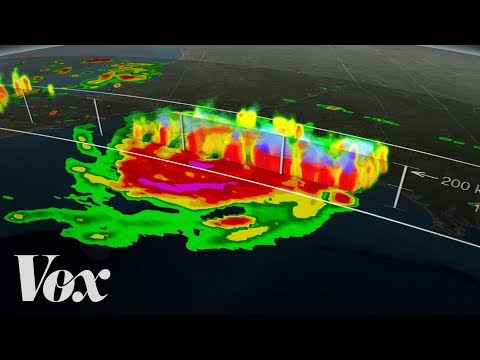
How climate change makes hurricanes worse
:
:
2017-08-29T02:01:50Z
Tuesday, 29 Aug 2017 - 02:01 AM
"Thirty inches of rain ahead."
"Could climate change be fueling
the history-making nature of this storm?"
We know that humanity's carbon footprint
has shifted the baseline conditions of the climate,
the context in which every weather event takes place.
But trying to isolate the human influence
from everything else that is going on can be really hard,
especially for hurricanes, or what scientists
call "tropical cyclones."
They're super complex and the quality of
the historical data we have for them isn't great.
We do have physics, though.
Hurricanes are driven by
the transfer of heat from the sea to the air
through evaporation.
The storm's maximum possible wind speed,
or its potential intensity,
depends in part on how warm the ocean is
And of course, we're warming the ocean.
So researchers expect intense tropical cyclones
to become frequent if we continue to warm the planet.
"That's one place I think you'd find a very
strong consensus among scientists who
study the connection between hurricanes and climate,
that the frequency of the high-end events
will probably go up."
And that shows up in climate models.
This is from the
intergovernmental panel on climate change
It summarizes the computer model results
for tropical cyclones near the end of this century,
compared to today.
The first bar represents
the total number of tropical cyclones globally.
That's projected to go down a bit.
But the second bar represents the
frequency of the most intense storms,
categories four and five,
and the models show those increasing
And that's bad news because those are
the storms that cause the most damage
and the biggest loss of life.
Now when they try to look at specific regions,
it gets really messy.
In the North Atlantic, for example,
the models show category four and five storms
maybe increasing by 200%
or maybe decreasing by 100%.
So, yeah, the resolution of their simulations
just isn't fine enough yet to give us
good regional projections,
even if they expect more intense storms globally.
But there's another really clear consistent result here
- this fourth bar, it represents the amount of rain
that hurricanes will bring and that's going up.
Not just for our Atlantic coast,
but for the Pacific coast of North America,
the western Pacific, the south Pacific,
and the Indian Ocean,
everywhere.
The hurricanes of the future will be wetter.
So coastal cities will face
freshwater flooding from the sky
paired with storm surge from the sea,
which is higher now
because we are also causing sea levels to rise.
And that trend of wetter storms isn't just for hurricanes.
Heavy precipitation events from other types of storms
have been increasing in The US
and should continue to increase across the country.
Even in places that might see
less rain over the whole year,
they'll get more days with really heavy precipitation.
This comes down to basic physics too:
warmer air can take up more water
before it dumps it back down on us.
All of this means global warming worsens floods
like the kind that hit Houston,
but it's not our destiny to hurt ourselves like this.
It depends on what we choose to do now.
We could rethink our infrastructure and regulations
to minimize the damage,
but unless we also start cutting our carbon emissions
and shifting the world to clean energy,
it's just going to get worse.
The collapse of Venezuela, explained We need to change how we bury the dead The tiny island in New York City that nobody is allowed to visit 10 Common Slavery Myths Trump's plan to cut his own taxes Africa's French Problem Hurricane Harvey Caused By Climate Change? Millennials in the Workforce, A Generation of Weakness - Simon Sinek Floods surge in Houston as water flows from reservoirs This timeline shows confederate monuments are about racial conflict
Facebook
Twitter
Google Plus
Vox
Latest Posts