-->
≡
Home
Woman
Sport
Business
Health
Privacy Policy
Contact Us
Contact Us
Things About The Lego Movie You Only Notice As An Adult
:
:
2017-08-21T13:08:28Z
Monday, 21 Aug 2017 - 01:08 PM
Lego is one of the most popular toys ever, so it's not a huge shock that The Lego Movie
was a huge hit when it was released in 2014.
A little surprising, however, was just how good it actually was.
It's the rare kids' movie that adults can truly enjoy, full of subtle jokes and references
targeted specifically at older viewers.
Here are a few things only the grown-ups in the theater noticed.
Legal woes
A big part of what makes The Lego Movie so fun is its authentic eye toward how real kids
play with Lego.
Most kids probably don't keep all their different types of Lego separate, and The Lego Movie
fittingly brings together a mixed set of characters, many of them licensed.
"Please, calm yourselves, Green Ninja, Milhouse, Nice Vampire, Michelangelo, Michelangelo,
and Cleopatra."
Kids don't know or c are much about intellectual property rights and copyright law, but most
adults watching with a critical eye knew what a legal nightmare it must have been to get
the rights to use so many different pop cultural entities in one place.
Co-directors and writers Phil Lord and Christopher Miller have since confirmed it was a logistical
nightmare, and with every major script revision, rights-holders had to be approached anew.
Clever casting
Savvy adults with a taste for quirky comedies surely spotted a few clever voice casting
decisions in The Lego Movie.
For example, co-directors Lord and Miller also created MTV's early 2000s cult classic
cartoon Clone High, about the teenage clones of a number of historical figures.
Will Forte voiced teen Lincoln in Clone High, and reprises his role as Lego Lincoln.
Channing Tatum and Jonah Hill play Lego Superman and Lego Green Lantern, respectively …
"I can't move."
"Don't worry, Superman.
I'll get you out of there!"
"No, don't!"
"Ah!
My hands are stuck!
My legs are stuck, as well."
"I super-hate you."
… and they had previously teamed up in the big-screen adaptation of 21 Jump Street, directed
by Lord and Miller.
Books and bricks
There are some relatively obscure literary and historical references scattered throughout
The Lego Movie.
The fantasy realm is named "Middle Zealand," a combination of Middle Earth, the setting
of The Lord of the Rings books, and New Zealand, where Peter Jackson's Lord of the Rings movies
were filmed.
Meanwhile, Cloud Cuckoo Land, Princess Unikitty's bright and shiny homeland in the sky, is a
direct literary reference.
The idea of an impossibly perfect city in the clouds of the same name first shows up
in all the way back in 414 B.C. in The Birds, a play written by the Greek playwright Aristophanes.
And then there's the wise sage Vitruvius: He's named after a 1st century B.C. Roman
philosopher best known for writing a 10-volume series of books about architecture — fitting
for a character in a flick made of bricks.
Honey, How'd I Meet Your Mother?
The most popular TV show in the Lego-verse is a dumb, one-joke affair called Where Are
My Pants?, where a pants-less character frequently wonders aloud about the whereabouts of his
pants.
"Honey, where are my pants?"
Kids may miss it, but adults recognize it's a jab at sitcoms that still air long after
their once-fresh premises have grown stale.
Sitcoms like, say, How I Met Your Mother, which took eight seasons to introduce the
audience to the namesake mother … and also happened to feature The Lego Movie's Phil
Lord and Christopher Miller as writers during its first season.
Inside jokes
There's a scene where Wyldstyle names a bunch of the realms of the Lego universe, and each
gets a second or two on screen …
"Your home, Bricksburg, is one of many realms in the universe.
There’s also this one, Pirates’ Cove, Knights’ Club, Vikings Landing, Clown Town,
a bunch of others we don’t need to mention."
Savvy older viewers know why: because they're discontinued or less popular Lego sets, such
as the controversial "for girls" Friends line, a set based on the big-screen bomb of Speed
Racer, the sci-fi Bionicle line, which disappeared from stores in 2010, and the despised Fabuland
line from the 1980s.
Mixed signals
It's not every day that a cheery comedy movie made for kids is also a subversive satire.
A critical read of The Lego Movie shows that it's quite anti-corporate and anti-capitalist.
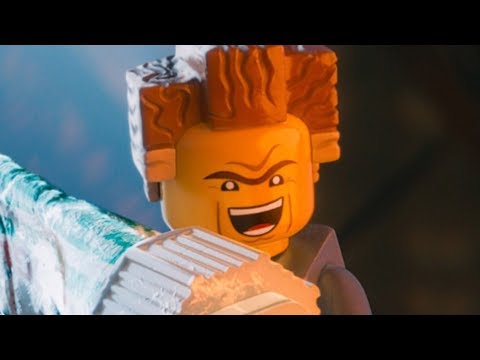
The villain of the movie is an evil, money-and-power hungry tycoon and tyrant named President Business,
known later as Lord Business.
Shortly after The Lego Movie's release in 2014, figures from the political left, such
as documentary filmmaker Michael Moore, praised the film's anti-business sentiment, while
more conservative entities, such as the Fox Business Channel, decried it.
"Y'know, listen, Hollywood has its own agenda, and we're kinda used to this, but it feels,
it feels a little bit more threatening when they start to push this out to our kids."
Of course, can a movie that also serves as a highly effective feature-length commercial
for a toy line really be that anti-capitalism?
Pure imagination
At the end of the movie, it's revealed that the action up to that point took place within
the imagination of a Lego-loving little boy playing with a massive Lego collection owned
by his father, played by Will Ferrell, who also provides the voice of Lord Business.
So all of that world-building, world-mixing, and searching for the "piece of resistance"
didn't actually happen.
It was all just a figment of the kid's imagination, and a neat little parable about creativity,
trust, and believing in yourself.
But by the time the sequel-teasing ending rolls around, most kids have already forgotten
all that, if they got the message in the first place ...
"We're from the planet Duplo, and we're here to destroy you."
"Oh man."
Thanks for watching!
Click the Looper icon to subscribe to our YouTube channel.
Plus check out all this cool stuff we know you'll love, too!
Facebook
Twitter
Google Plus
Looper
Latest Posts