-->
≡
Home
Woman
Sport
Business
Health
Privacy Policy
Contact Us
Contact Us
How Leonardo Da Vinci 'Augmented Reality' — More Than 500 Years Ago
:
:
2017-10-06T17:09:54Z
Friday, 6 Oct 2017 - 05:09 PM
We think of Leonardo da Vinci
as one of the world’s most masterful artists.
But, really, he was a scientist,
incorporating anatomy, chemistry, and optics
into the artistic process.
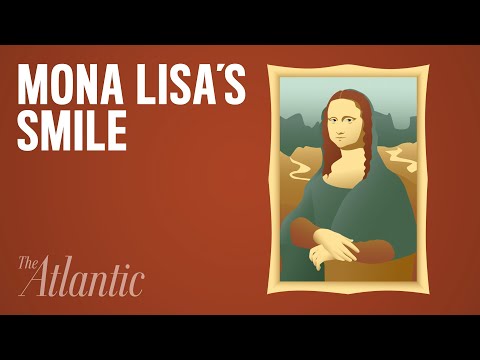
With the Mona Lisa, Leonardo was able to bring
a one-dimensional painting to life,
creating an augmented reality experience
centuries before the concept even existed.
During the years when Leonardo was perfecting Mona Lisa’s smile,
he spent his nights in a morgue in Florence,
dissecting cadavers to better understand the human body.
He identified and drew bones, muscles,
and nerves in his notebooks.
He was obsessed with understanding the mechanics
of human expression:
examining the muscles that move the lips, cheeks, and teeth.
Amid these observations,
we see the makings of Mona Lisa’s smile.
But Leonardo had a problem:
He could now envision the Mona Lisa,
down to the inner workings of her face.
But how could he make her real?
For that, he turned to chemistry.
Leonardo began the painting with a primer coat of lead white,
rather than just a mix of chalk and pigment.
He knew that this undercoat
would be better at reflecting light.
He then applied glazes with a small proportion
of pigment to oil, rendering them translucent.
On the cheek, Leonardo applied lines only
5 to 30 micrometers thick,
which made his brush marks almost invisible.
Paint strokes were applied
in an intentionally irregular way
that served to make the grain of the skin look more lifelike.
For the shadows that form the contours
around Mona Lisa’s smile,
Leonardo pioneered the use of an iron and manganese mix.
The many layers of glaze made the painting seem
three-dimensional.
Leonardo eventually had a strikingly realistic portrait.
But he still wanted more:
to make it interactive,
taking that final step into our reality.
And for this, he incorporated
his studies of optics.
Leonardo discovered that the central area
of the retina, known as the fovea,
is best at picking up small details,
like the edges of Mona Lisa’s lips.
The area surrounding the fovea, meanwhile,
is best at picking up shadows and shadings
of black and white.
Leonardo masterfully manipulated the details
and shading around the lips to take full advantage
of peripheral vision.
When you look at Mona Lisa’s lips,
she doesn’t appear to be smiling.
But, when you look away,
a smile appears.
By leaning on science, Leonardo da Vinci
was able to create a living smile,
one that is elusive
if we are too intent on seeing it.
Stand before the painting,
and the science, magic, and art
all blur together
into what some consider the world’s first
augmented reality experience.
Mass Shootings in the United States: 'This Is Who We Are' Does Swearing Make You Likable? What if Everyone Ate Beans Instead of Beef? Some Americans are ignorant and proud of it! (76) What continent is Europe in? The 13 Extraterrestrial entities that are currently living on earth ‘It’s Impossible to Imagine Trump Without the Force of Whiteness' 10 Secret Reasons You Don't Know about Everyday Things How Just Six Words Can Spark Conversation About Race in America Your brain hallucinates your conscious reality | Anil Seth AWESOME Inventions By Leonardo Da Vinci!
Facebook
Twitter
Google Plus
The Atlantic
Latest Posts