-->
≡
Home
Woman
Sport
Business
Health
Privacy Policy
Contact Us
Contact Us
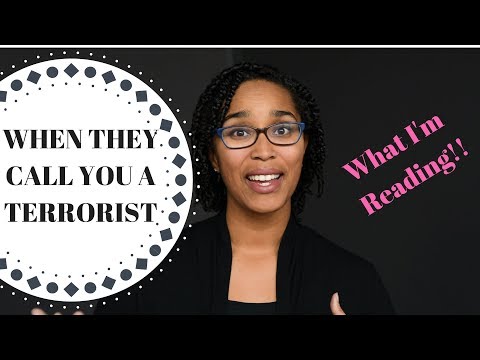
Book Review: When They Call You a Terrorist
:
:
2018-03-29T14:44:20Z
Thursday, 29 Mar 2018 - 02:44 PM
Watch the video
click to begin
Youtube
In today's "what I'm reading," we have When "They Call You a Terrorist" Black Lives
Matter memoir by Patrice Kahn Cullors and Asha Bandele. Patrice is one of the
cofounders of black lives matter and the reason why I picked up the book was
because I met Patrice in 2015 and was really intrigued by their story and was
curious what came before such a public life what fueled her to to do all that
she's done and is doing and so I think if you read this book you get a sense of
what politicized Patrice and why she has such a love for black people, why black
lives matter, and how the love of black people fuels black lives matter one of
the surprises of the book was that it wasn't just about Patrice's story and
her development but how her brother Monty or father Gabriel, her mom so many
people how their experiences shaped her thinking if you read this book you see
people humanized. Gabriel her father isn't just a number in the prison
industrial complex he's a full human being who struggles with addiction. her
brother is a young man who struggles with mental illness. these men are so
much more than their addiction in their mental illness, yet the book helps you
understand how systems of oppression exacerbate their experiences negatively
rather than support them or help put in preventive measures. and their stories
are not singular. there are ways in which this book brings into view some of the
basic and everyday ways that tragically black lives are targeted and impacted
negatively this book made me feel heavy at times proud I cried I raged there
were times where I put the book down and said to my partner like you won't
believe this because I think as a as a psychologist Monty story just hit me
hard that this young man didn't have an infrastructure to help
identify what was happening with him support the family and navigating care
that the police had so damaged his trust for authority and help that he was
hesitant and it took a lot of work to get him to agree to go get help. that
there were times that he went unmedicated or over medicated and it was
all at the whim or what suited the people in authority, not what was best
for him. and that disregard for his humanity and his dignity inherent in who
he is made me angry and knowing that the largest mass of mental health patients
is in the LA Jail that is maddening and for me as a psychologist I understand
the depth of pain that individuals must be in and the like the callousness
and disregard that we have for humanity if we don't support their health their
mental health let alone all the other ways that the prison system breaks
people I mentioned that black people aren't a monolith right so racism of
course impacts us but also homophobia and heterosexism and classism and so
Patrice's story brings in all of those intersecting identities and there's this
moment where she's sitting at the table she had been plucked out of her
neighborhood and chosen to go to a predominantly white school in a neighborhood
nearby that was very different than her neighborhood and she's sitting at dinner
with one of her friends and the family is all sitting down and the father's
asking about their day and their dreams and she talked about how idyllic that
scene was but then as he continues to talk she puts together the fact that
HE'S their slum Lord. he's the one that allows the building they live in their
apartment their appliances to be in disrepair and so sitting in that
contradiction is it's messy it's messy and so to be witness to her reflection
on all of those experiences was was really a gift and it made me think about
how often we accept things as just the way they are that young black
kids might in a way get plucked out of their neighborhoods to go to a "good
school," and how it's seen as oh they're so lucky that they get to go to
somewhere that's resourced. and we often don't stop to ask "don't all those other
kids who aren't plucked out also deserve to be resourced?" why are we accepting that
only a few should get to escape and even this idea that you escaped escaped from
your neighborhood where your home is rather than how about we make an
investment in neighborhoods and schools so that everyone can be in a place that
they're healthy, safe, resourced, educated, and maybe think about the idea of
appropriated oppression and how its those dynamics where it's easy to pick
up 'oh well if I've been plucked out, I must be better than or
these people must be worse than and if I am trying to get out of my neighborhood
then there must be something wrong with it inherently rather than helping people
understand the systemic ways in which neighborhoods are divested and people
and whole groups are stripped of their humanity there are lots of messages that
could be inferred right you have people who are left behind and aren't plucked
thinking oh I'm not good enough. you have people looking on from the outside to
say oh look only a few of them can cut it in these good schools so it messes
everyone up to leave areas of our communities so divested. and as I was
reading the book I really felt my kind of class privilege and I realized you
know my parents are of the generation where they grew up in an under resourced
district and chose to raise us in a problem white really resource district
and yet they made sure that we knew that we were no different no better than
other people in our family who didn't make the same choice or who couldn't
make the same choice and so what might look like a good program the busing the
the transfer programs still perpetuates an idea of inferiority of black people
and I think it's worth us disrupting that and questioning that
narrative because it's simply not the case. this book made me think about a
lot of those dynamics and it's through Patrice's story that we see how black
lives matter is not just a demand it's a plea it's a prayer it's a hope and yet
it's the truth and her book does a beautiful job of helping us understand
the intersecting and overlaying ways in which black people have been dehumanized.
even though the truth is black lives matter we have yet to act in a way as a
country like black lives MATTER. therefore, we have her story. and I won't
ruin it but the wind they call you a terrorist is not just about her there's
some other layers in there that make you understand how loosely and falsely
people can be accused of terrorism simply for asserting themselves and
their own dignity so I'll leave you with that hopefully that's a teaser enough to
get you to pick it up and check out her Facebook live discussion of lv.1 March
29th in the evening on Facebook live and probably some other ones I know she's
also doing book tours but this is worth picking up and if you can hear her in
first person talk about her life experience it is worth making happen
thanks for listening if you've read the book let me know what resonated with you.
what questions does it have you pondering? what did you want to discuss
with your friends and family after reading it? let me know in the comments,
subscribe to my YouTube channel, and we'll see
you next time on "what I'm reading."
Follow the Lead of Young People and Their Ability to See What Can Be Chanelle Helm vs Jeffrey Mark Klein Reni Eddo-Lodge: Why I'm No Longer Talking to White People About Race How Structural Racism Works: Tricia Rose Cornel West: "Speaking Truth to Power" Book Review: Ta-Nehisi Coates - Between the World and Me Ta-Nehisi Coates explores America's racial divide in new book Did I Call You at a Bad Time?? Selling Window Cleaning Jobs over the Phone. (Phone Tactic) Ben Feldman Book The Feldman Method Book Review. The Insurance Sales Classic Did Gender Matter? / The Politics of Gender
Facebook
Twitter
Google Plus
Latest Posts