-->
≡
Home
Woman
Sport
Business
Health
Privacy Policy
Contact Us
Contact Us
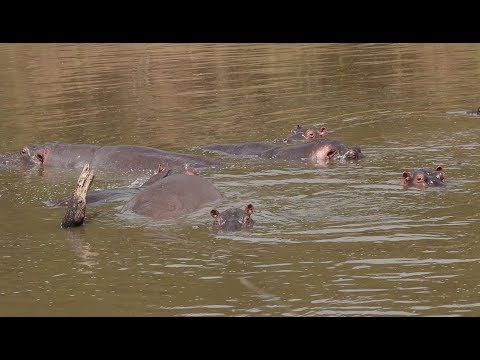
Hippos and the Mara River
:
:
2018-05-16T18:49:26Z
Wednesday, 16 May 2018 - 06:49 PM
Watch the video
click to begin
Youtube
[African bird call sound]
The Mara Serengeti supports millions of wildlife.
This includes 1.2 million wildebeest a couple hundred
thousand Zebras. Elephants. It's a really spectacular
display of wildlife that you don't find anywhere
else in the world. The Mara River is considered the life
blood of the Serengeti because it is the only permanent source
of water for wildlife during the dry periods of the year.
Back in 2008 we began to notice something really strange
happening in the Mara River where every once
in a while after a flood came through all the fish would die
in a section of the river. That kind of peaked our interest
to what may be causing these big fish kill events.
It wasn't until about 2010…
in 2011 when we actually put a water quality sonde
in the river and we saw these really strange drops
and dissolved oxygen that would occur during
the flood pulse and rebound within a period of about eight hours
Among those wildlife are four thousand hippos that spend every
day in the river but they spend their nights in the grasslands
eating grass. And when they return to the river we
estimate that they excrete eight to nine thousand kilograms
of organic matter every day into the Mara River.
So we use a number of small bottle experiments where we
tested the effect of adding hippo feces and adding hippo
pool water to just normal river water and how it depletes the
dissolved oxygen. We then scaled up from the bottles
to an experimental stream array that we've built in the field.
So the stream array has about 60 litres of water
in it and a small paddlewheel pushes the water around
it so it simulates what a river experiences with oxygen exchange
with the environment. We added hippo feces and hippo pool water
to those streams to try to really understand how
the oxygen is depleted and the mechanisms involved.
After the experimental stream array, we again try to upscale
what we're doing and we experimentally flushed a hippo
pool. We found a pool that never had hippos in it, we built a
small dam upstream of it, let the water back up over
several days. We then breached the dam.
[voice - There it goes. Sound of running water]
And let that flood move through the pool to catalogue what's
happening to a normal pool when a flood moves through it.
We then did that experiment again but we added over 16,000
litres of water from the bottom of a real hippo pool into that
experimental pool. We built the dam again and then we flushed it
[voice - 3-2-1... sound of rushing water]
to then see experimentally what's happening downstream
with these hippo pools when we do flush them.
So all of these measurements and methods we employed showed
us that organic matter as it decomposes was robbing the
river of its oxygen. Our studies of the Mara river
suggest that large wildlife and unregulated rivers can also
have low oxygen events like we see where there is human inputs
of sewage or other agricultural waste. So our studies
on the Mara River are giving us a picture of what rivers may
have looked like historically when they were unregulated and
when there were large populations of wildlife
interacting with the river.
[Sound- African bird call ]
10 Unbelievable Animals That Saved Other Animals Crocodiles Attack Zebras Crossing the Mara River | Kenya Most Brutal Chimpanzee Society Ever Discovered | Rise of the Warrior Apes Birth of a giraffe at the Dallas zoo apr.-10-2015 When Hippos Attack Amazing Man Help Dead Shark Give Birth To 3 Baby Shark On The Beach Primitive Technology - Find Crocodile by Spear in river - cooking Crocodile eating delicious Yale and the World (English) A must watch from Maasai mara - Lions crossing Mara river 8 Zoo Fails
Facebook
Twitter
Google Plus
Latest Posts