-->
≡
Home
Woman
Sport
Business
Health
Privacy Policy
Contact Us
Contact Us
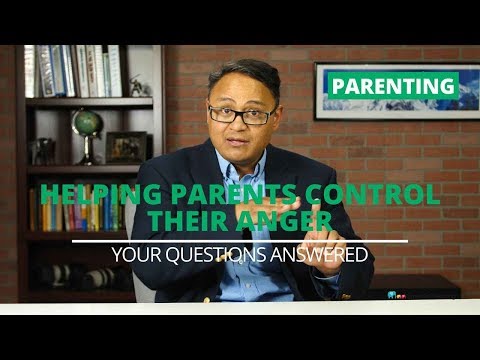
How to control anger | Temper control for parents
:
:
2018-05-03T21:33:25Z
Thursday, 3 May 2018 - 09:33 PM
Watch the video
click to begin
Youtube
Hi. Welcome back. Today I wanted to talk to you about anger and how parents
experience anger when their child misbehaves. And the reason that this is
important to understand, is that it gives you a better understanding of what you
can do instead of reacting with anger and emotion. Really, when it comes down to
children and anger between parents, in my experience in working with different
families over a decade, what I found is what makes the parent most angry is this.
They're angry because the child is not behaving the way they want their child
to behave. That really is it. If their child behaved the way the parent wanted
the child to behave, no anger. But when the child deviates from that, it really
makes these emotions very strong about anger. Even if the parent has told the
child what to do and the expectation is there for the parent, the child deviates
a little bit and then the emotions start to come out. And it usually comes out
through yelling. Through adult tantrums. I guess that's what I'll call it. Adult
tantrums where they're just so frustrated and so upset. And it's usually
in the form of words like, "I can't believe they did this. I can't believe my
child behaved this way after I told them a million times." Okay.
Again, we understand where the anger comes from. Now let's understand where
the child comes from. We have this developing baby who's dependent on a
parent to tell them what to do when they're first born and as the child
begins to grow there's a certain amount of independence. Especially around 3 or 4.
You're gonna notice the kids don't want you to help them do things anymore. Okay.
The things that you normally did for them they're gonna be like, "I can do it
myself. I can do it myself." This trend will
continue as a child grows. Up into their teen years it's even more push back. Now
why is that? It's because they're creating independence. So what does that
mean, okay. We have one track where the parents
like, "Do what I say because you're gonna be better off for it. Your life is going
to be better" and they get angry when you don't. And yet we have this child who's
like, "I need to be independent and I need to find my own way and figure
things out on my own." So it creates this environment with the parent-child
relationship where they're bound to clash.
Especially around teenage years when the child is really more independent than
they have been when they were younger. The general idea behind Smarter
Parenting, the skill of Observe and Describe on the Smarter Parenting ,
is to help parents disconnect and grow along with the development of your child.
So in the skill for example, one of the essential skills on Smarter Parenting is
Observe and Describe. It's the first skill. It sounds like it's the easiest
skill, but there are components to it that are very very difficult which is
managing your emotional response, right. As a child is continuing to grow, and
they're completely dependent to where they're independent, and you see this a
push back, away from parents. Observe and Describe helps you along that way. Along
the whole way if you learn to disconnect the emotional response to what your
children is doing in how they're responding.
Sounds like a super difficult thing to turn off that emotional response, but it
is the skill that parents need to master as your child grows. Because if you
respond emotionally, what you do, is you set up these boundaries of what's safe
and what's not safe to talk about or to do with your child. So just be aware of
those things. Visit the Observe and Describe lesson so you can learn how to
use this skill. But again, it's one of those essential easy, it sounds super easy to
do, but super difficult to do. Mainly because of that emotional component. And
remember we have those two tracks. We have the child who's pushing towards
independence. We have the parent who's wanting the child to do what they say
and when they want them to do it and expecting them to follow through. They
don't match. The two, the two developmental things, just don't match.
And so it needs to be a mindset for the parent to understand my child is going
to make mistakes. My child is not going to do what I want them to do. My child is
figuring out how to create this independence and how the world works. And
as a parent, you need to turn off that emotional
response and say, "Okay this is my child figuring things out. Let me guide them
along the path to a better way." Now does that mean you can't correct your child?
Absolutely not. You need to correct your child, but you can do that in a safe
and effective way and still maintain a relationship of trust. So later on when
they're really really independent, they don't actually push you away to a
point where you don't have a relationship anymore. That's what you do
not want. So again, remember a child's development towards independence. A
parent wanting the child to do what they say along the way.
You don't, you really don't want that. You really don't want your child to do
everything you say all the time because that actually robs them of growing up
into independence. Just be aware of those things. I'd be interested to hear your
thoughts and your comments in the comments below. And don't forget to
subscribe to our YouTube channel. And visit the Smarter Parenting website for
some of these skills, especially Observe and Describe. I really, really,
really hope that you will go and visit that page, just so you can master that
particular skill, because it's one of those skills that you're gonna use actually as
your child grows all the way up into adulthood.
you
10 Ways to Discipline Your Children How to Stop Kids from Talking Back | Stop Teens from Talking Back Immediately! Child Psychology : How to Set Limits with a Strong-Willed Child How to Stop Back Talk and Get Kids to Listen How To Get Your Child to Listen! Parenting Adult Children Living At Home Child Psychology : How to Discipline a Child That Does Not Listen How to get your child to listen to you Three Ways to Stop a Toddler Tantrum Parenting & Discipline : How to Discipline an ADHD Child
Facebook
Twitter
Google Plus
Latest Posts