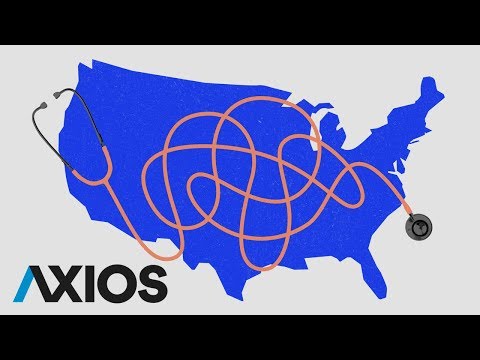
at all.
It's a patchwork.
A bunch of different systems crammed together.
That's why it's so expensive and why it can be such a pain to use.
We've never really decided what we want to prioritize, and that's part of the reason
we don't have universal health care, like so many other countries do.
So why doesn't the U.S. have universal health care?
There have been lots of calls for it, dating back to Theodore Roosevelt, who proposed national
health insurance in 1912.
But a national system of government-run health insurance never happened.
Instead, employers started offering health insurance in World War II as a benefit to
attract workers, since everyone's wages were frozen.
That's how we got the employer-based health insurance system we have today.
Instead of creating one program to cover everyone else, the U.S. decided to add onto it piece
by piece:
* Medicare for seniors.
* Medicaid for low-income people.
* CHIP for kids.
* And each one of those programs is a patchwork within itself.
Then there's the Affordable Care Act, another complex marketplace for people who don't
have another source of health coverage.
The catch is - that still leaves about 28 million people uninsured, including low-income
adults and non-citizens.
Many of those who haven't signed up say it's because they can't afford the coverage.
By contrast:
* Canada has had national health care since 1968.
* Britain has had it since 1948.
* Germany requires everyone to be insured by a "sickness fund" — a system that
started in 1883.
* Switzerland has required everyone to buy health insurance since 1996.
The bottom line: Unlike other countries, the U.S. has never reached a consensus on whether
health care is a right, or whether universal health care should be a goal.
Unless that happens, the U.S. isn't going to have the kind of health care safety net
that other countries have.
DW - Live (English) WATCH LIVE: Lava erupts from Kilauea volcano in Lower Puna Hawaii Learn English in 24 Hours with EnglishClass101 TV How to master conspiracies and deny science The looming data questions on police body cameras What the internet's biggest mistakes can teach us about the future The state of dockless scooters Kids explain the #marchforourlives in their own words The main themes you're going to hear on gun control The life of an underpaid teacher