thought about it until I got where I was today. Looking
back I always really liked rodents. A lot of the research that's done in my lab
has to do with animal welfare and trying to figure out how to provide for the
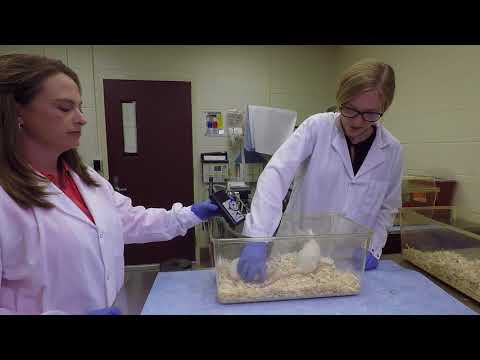
needs of captive animals. We got into rat tickling in order to improve the welfare
of laboratory rats and the reason that it's called tickling is because the
motion that you do with your fingers is very similar to a human. There are two
main aspects that we're trying to mimic of rat rough-and-tumble play and the
first one is the dorsal contact which you use your fingers to lightly touch
the back of the rats neck. And then the second aspect is the pin, where one rat
will jump on top of the other rats and pin it to the ground and they kind of go
back and forth with this and so we try to mimic with our hands these two
aspects.
-We often get comments that well I really don't like tickling, or you know
I've always hated being tickled, but let me assure you that rat tickling is not
the same as human tickling. It's much more like wrestling with your dog or a
small child that's laughing. It's not very similar at all really to tickling
an adult human.
-So when rats are tickled they give off
these ultrasonic vocalizations which we as humans can't actually hear, and so we
use a bat detector in order to bring that down to a level that's audible to
us as humans in order to hear these positive vocalizations. They do these
vocalizations when they're playing, when they eat really tasty treats, so it's
really exciting for us to have this indicator of positive welfare for rats.
-We often get the question of "Can I tickle other laboratory species?" the
short answer is "no." Please don't tickle your mice. They will probably bite you
because they don't play the same rats.
-By increasing this human animal
interaction, the the animals are more likely to want to interact with us so
we're reducing fear, we're reducing stress, and when it comes to utilizing
these animals in a scientific aspect it's probably going to make them better
models for the research that any scientist is going to be doing. We want
to give them the highest quality of life possible and this is one way to actually
give them a positive interaction, positive experience when working with
humans that is very unique and it's it's a really exciting way to interact with
the animals and do it in such a positive fun way.
Rat-A-Tat |'Haunted Night Best Scary Spooky Cartoons 2017'| Chotoonz Kids Funny Cartoon Videos 14 Genius Tricks To Keep Flies Out Of Your Home & Garden How to Know if Watermelon is Ripe - Proven Methods DIY natural fertilizers, insecticides, herbicides and fungicides with house hold items Rat-A-Tat|'Chef Don And More Cartoons for Children'|Chotoonz Kids Funny Cartoon Videos How to Properly Apply Nitrogen Fertilizer How We Harvest and Eat Sunflower Seeds - An American Homestead Roundup vs Vinegar Weedkiller: The Ultimate Test Commercial Cultivation of Banana How to grow Banana Tree Part 2 : Banana Farm Management | Agribusiness Philippines